How Your HVAC Contractor Determines the Cost of AC Installation
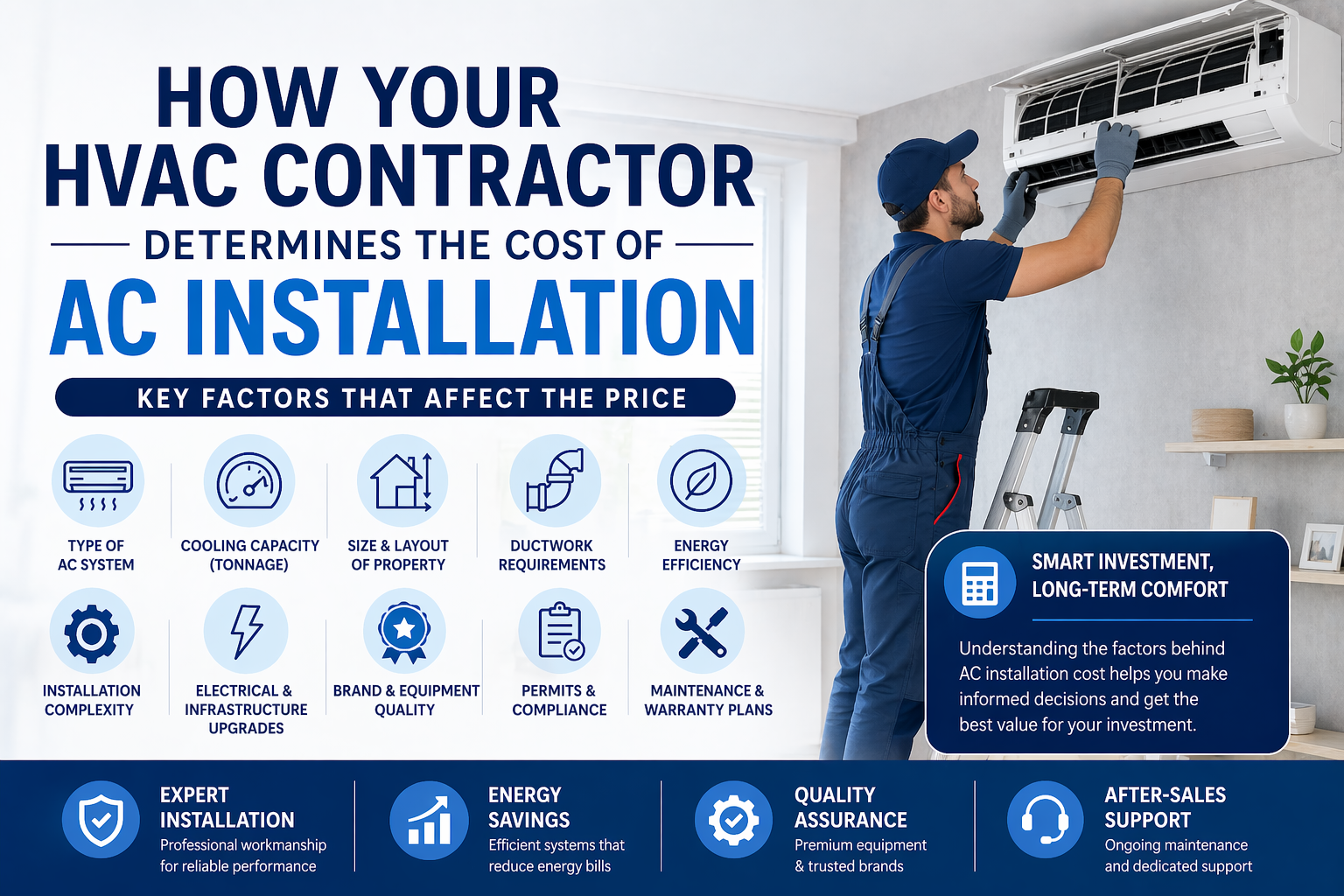
When planning to install a new air conditioning system, one of the first questions that comes to mind is: “How much will it cost?” While many homeowners and business owners expect a simple answer, the reality is that AC installation costs vary widely based on multiple factors.
Professional HVAC contractors don’t just give random estimates—they carefully evaluate several technical and practical aspects before providing a quote. Understanding how these costs are determined can help you make smarter decisions and avoid unexpected expenses.
Why AC Installation Costs Vary
There’s no one-size-fits-all pricing for AC installation. Every building has unique requirements, and HVAC contractors must assess these before recommending a system.
The total cost typically includes:
- Equipment (AC unit)
- Labor and installation
- Materials (ducts, wiring, fittings)
- Additional upgrades or modifications
Let’s break down the key factors that influence the final price.
1. Type of AC System You Choose
The type of air conditioning system you select plays a major role in determining cost.
Common AC Systems:
- Split AC systems: Affordable and ideal for small spaces
- Ductable AC systems: Suitable for medium to large areas
- VRF/VRV systems: Advanced systems for commercial buildings
- Central air conditioning systems: Best for large-scale cooling
More advanced systems with smart controls and zoning capabilities typically cost more but offer better efficiency and long-term savings.
2. Cooling Capacity (Tonnage Requirement)
HVAC contractors calculate the required tonnage based on your space. This is one of the most critical steps in pricing.
Factors affecting tonnage:
- Room or building size
- Ceiling height
- Insulation quality
- Number of occupants
- Heat-generating equipment
If the system is undersized, it won’t cool effectively. If oversized, it will waste energy. Proper load calculation ensures optimal performance and cost efficiency.
3. Size and Layout of the Property
The complexity of your property significantly affects installation costs.
- Larger spaces require more powerful systems
- Multiple rooms or zones need additional units or ductwork
- Complex layouts increase labor and material requirements
For example, installing AC in an open-plan office is generally cheaper than in a multi-room commercial building.
4. Ductwork Requirements
Ductwork can be one of the most expensive parts of AC installation.
Scenarios:
- Existing ductwork (good condition): Lower cost
- Duct repair or modification: Moderate cost
- New duct installation: Higher cost
Contractors also ensure proper duct design to prevent energy loss and maintain airflow efficiency.
5. Energy Efficiency Ratings
Energy-efficient systems (like inverter ACs or high SEER-rated units) cost more upfront but reduce electricity bills over time.
Why contractors recommend efficient systems:
- Lower operating costs
- Reduced environmental impact
- Better cooling performance
While the initial investment is higher, the long-term savings often make it worthwhile.
6. Installation Complexity
Not all AC installations are straightforward. Contractors consider:
- Accessibility of installation site
- Structural modifications required
- Electrical upgrades
- Mounting challenges
For example, installing a rooftop unit or working in a high-rise building can increase labor costs.
7. Electrical and Infrastructure Upgrades
Sometimes, your existing electrical system may not support a new AC unit.
Additional costs may include:
- Upgrading wiring
- Installing new circuits
- Adding stabilizers or panels
These upgrades ensure safe and efficient system operation.
8. Brand and Equipment Quality
The brand and quality of the AC unit also influence the price.
- Premium brands cost more but offer better durability
- Budget options are cheaper but may have higher maintenance costs
HVAC contractors usually recommend brands based on reliability, warranty, and performance.
9. Labor and Installation Charges
Labor costs vary depending on:
- Project size
- Installation complexity
- Contractor expertise
Experienced HVAC professionals may charge more, but they ensure proper installation, which reduces future repair costs.
10. Permits and Compliance
For commercial or large-scale installations, contractors may need permits and must comply with local regulations.
These costs can include:
- Inspection fees
- Safety compliance costs
- Documentation
Though often overlooked, these are essential for legal and safe operation.
11. Additional Features and Customization
Modern HVAC systems come with advanced features that can impact cost:
- Smart thermostats
- Zoning systems
- Air purification systems
- Automation controls
These features enhance comfort and efficiency but add to the overall installation cost.
12. Maintenance and Warranty Plans
Some contractors include maintenance packages or extended warranties in their pricing.
Benefits:
- Reduced long-term repair costs
- Better system performance
- Peace of mind
While optional, these plans can be a valuable investment.
How Contractors Provide Accurate Estimates
Professional HVAC contractors follow a structured process:
- Site inspection – Evaluate space and requirements
- Load calculation – Determine correct system size
- System recommendation – Suggest suitable options
- Detailed quotation – Break down all costs
This ensures transparency and helps clients understand exactly what they’re paying for.
Tips to Get the Best Value for Your AC Installation
1. Get Multiple Quotes
Comparing quotes helps you understand market pricing and avoid overpaying.
2. Don’t Choose Based on Price Alone
The cheapest option may lead to poor installation and higher long-term costs.
3. Focus on Energy Efficiency
Investing in efficient systems reduces electricity bills over time.
4. Work with Trusted Professionals
Experienced contractors ensure proper installation and long-lasting performance.
Why Choose Coolixa HVAC?
At Coolixa HVAC, we take a transparent and customer-focused approach to AC installation. Our team carefully evaluates your requirements and provides customized solutions that balance cost, performance, and efficiency.
What sets us apart:
- Accurate load calculations
- High-quality equipment
- Professional installation
- Ongoing support and maintenance
We believe in delivering value—not just services.
Final Thoughts
The cost of AC installation isn’t just about the price of the unit—it’s a combination of system type, property requirements, installation complexity, and long-term efficiency.
By understanding how HVAC contractors determine these costs, you can make informed decisions and invest in a system that delivers comfort, reliability, and savings for years to come.