How Much Does Industrial HVAC Cost per Square Foot?
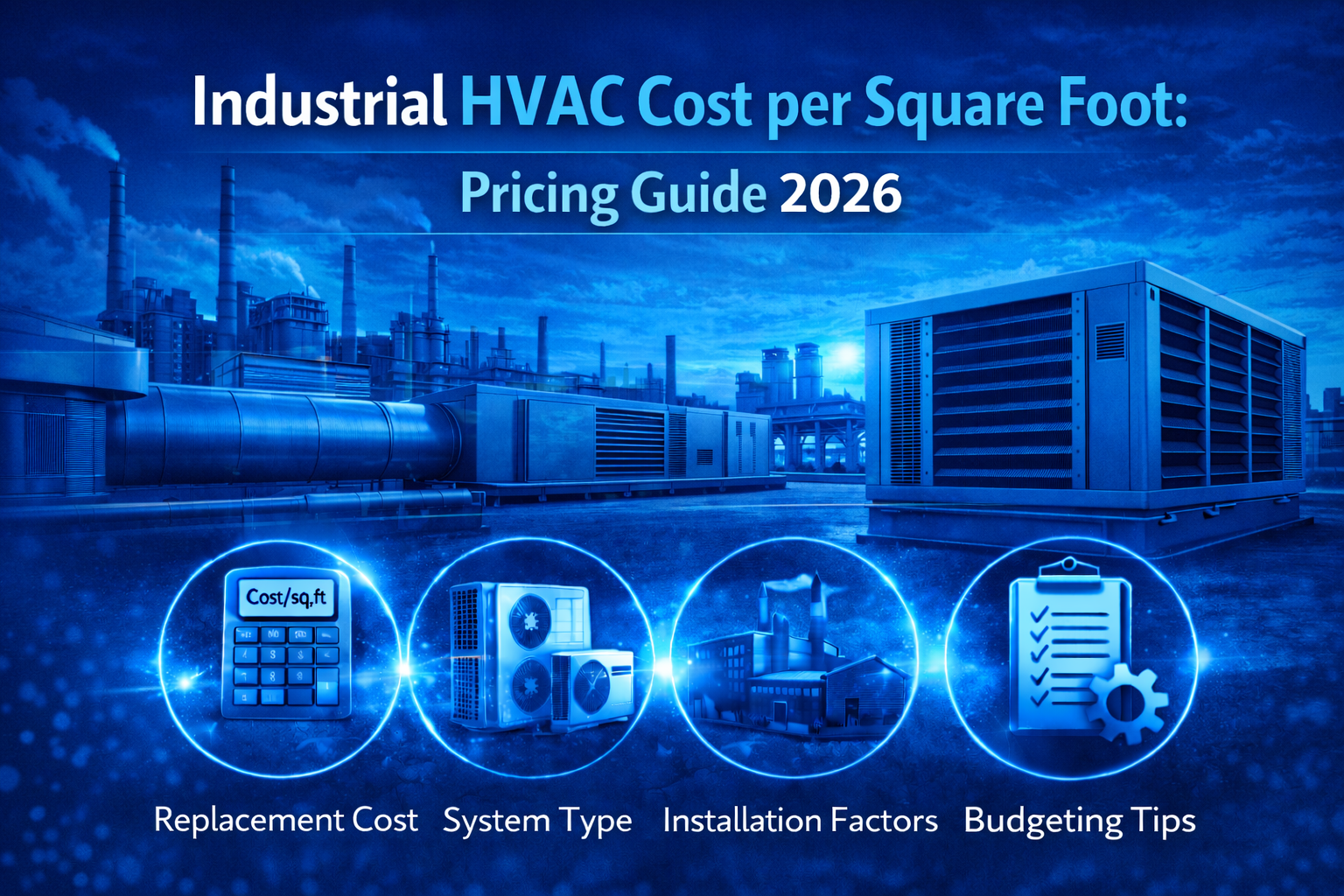
Industrial HVAC systems are essential for maintaining proper temperature, ventilation, and air quality in manufacturing plants, warehouses, processing facilities, and other large industrial buildings. Unlike residential or small commercial systems, industrial HVAC installations must handle large spaces, heavy machinery heat loads, and strict environmental requirements.
Because of these complexities, one of the most common questions businesses ask during planning is: How much does industrial HVAC cost per square foot?
The answer varies depending on system type, building size, and installation complexity. In this guide, we explore the average cost per square foot for industrial HVAC systems and the factors that influence pricing.
Average Industrial HVAC Cost per Square Foot
Industrial HVAC costs are often calculated using a cost-per-square-foot model during the early planning phase of construction or system upgrades.
On average, industrial HVAC systems typically cost between:
₹1,200 to ₹3,000 per square foot in India depending on system type, building requirements, and project scale.
For very large industrial facilities or warehouses, the cost may fall closer to ₹1,000 to ₹1,800 per square foot due to economies of scale. However, specialized facilities requiring precise climate control—such as pharmaceutical manufacturing plants or food processing facilities—may see costs exceeding ₹3,500 per square foot.
These estimates generally include:
-
HVAC equipment
-
Ductwork and ventilation systems
-
Installation labor
-
Electrical integration
-
System testing and commissioning
However, the final cost depends on multiple technical and structural factors.
Factors That Affect Industrial HVAC Cost
Several variables influence the cost of installing an industrial HVAC system.
1. Building Size and Ceiling Height
Industrial buildings typically have very large floor areas and high ceilings. This means HVAC systems must be powerful enough to maintain consistent airflow and temperature across large spaces.
For example:
| Facility Size | Estimated HVAC Cost |
|---|---|
| 10,000 sq ft warehouse | ₹1.2M – ₹2.5M |
| 50,000 sq ft factory | ₹6M – ₹12M |
| 100,000 sq ft industrial facility | ₹12M – ₹30M |
High ceilings require stronger airflow systems and specialized ducting to distribute conditioned air evenly.
2. Type of Industrial HVAC System
Different HVAC technologies come with different cost ranges.
Packaged Rooftop Units (RTUs)
Rooftop units are commonly used in industrial buildings and warehouses.
Average cost:
₹7 lakh – ₹25 lakh per unit
They combine heating and cooling components into a single system installed on the roof.
Split HVAC Systems
Split systems include separate indoor and outdoor units connected by refrigerant lines.
Average cost:
₹5 lakh – ₹18 lakh
They are suitable for medium-sized industrial spaces or facilities with multiple zones.
VRF / VRV Systems
Variable Refrigerant Flow systems allow precise climate control across different zones within a building.
Average cost:
₹20 lakh – ₹80 lakh+
These systems are ideal for large industrial buildings that require separate temperature zones.
Chiller Systems
Chiller-based HVAC systems are typically used in large manufacturing plants, data centers, and pharmaceutical facilities.
Average cost:
₹80 lakh – ₹3 crore+
These systems circulate chilled water throughout the building to regulate temperature.
3. Ductwork and Ventilation Requirements
Ductwork is a major cost component in industrial HVAC installations.
Large industrial facilities require extensive duct networks to distribute air effectively. The complexity of duct design and installation can significantly affect project costs.
Additional ventilation may also be required to remove:
-
Heat generated by machinery
-
Industrial fumes
-
Dust or airborne contaminants
Specialized ventilation systems can increase HVAC installation costs.
4. Cooling Load and Equipment Heat
Industrial facilities often contain heavy machinery that generates large amounts of heat.
Examples include:
-
Manufacturing equipment
-
Industrial ovens
-
Server rooms or data centers
-
Production lines
The HVAC system must be designed to handle these additional heat loads, which increases system capacity and installation costs.
5. Energy Efficiency and Smart Controls
Energy-efficient HVAC systems may cost more initially but can significantly reduce operating costs.
Common energy-efficient features include:
-
Variable speed compressors
-
Smart thermostats
-
Energy recovery ventilation
-
Building automation systems
Industrial facilities that operate 24/7 often prioritize energy efficiency because HVAC systems consume a large portion of total energy usage.
Industrial HVAC Cost Calculation Example
Many contractors estimate HVAC costs using a simple square-foot formula.
HVAC Cost Formula
HVAC Cost = Building Size × Cost per Square Foot
Example:
-
Factory size: 20,000 sq ft
-
Estimated HVAC cost: ₹2,000 per sq ft
Estimated project cost:
20,000 × ₹2,000 = ₹4 crore
This estimate includes equipment, installation, ductwork, and system integration.
However, specialized facilities may require additional HVAC features that increase costs.
Additional Costs in Industrial HVAC Projects
When estimating industrial HVAC costs, businesses should also consider several additional project expenses.
HVAC System Design
Professional HVAC engineering and load calculations ensure the system is properly sized.
Electrical Infrastructure
Large HVAC systems require significant electrical capacity, which may require upgrades.
Structural Modifications
Heavy rooftop units may require structural reinforcements to support equipment weight.
Building Automation Systems
Many industrial facilities integrate HVAC systems with centralized building management systems to monitor energy usage and performance.
These additional costs can add 10% to 30% to the overall HVAC project budget.
Maintenance and Operating Costs
Industrial HVAC systems require regular maintenance to ensure reliable operation and long equipment lifespan.
Typical maintenance tasks include:
-
Cleaning coils and filters
-
Checking refrigerant levels
-
Inspecting motors and fans
-
Monitoring system performance
Annual maintenance costs for industrial HVAC systems typically range between ₹2 lakh and ₹10 lakh depending on system size and complexity.
Routine maintenance reduces downtime and improves system efficiency.
Tips to Reduce Industrial HVAC Costs
Businesses can reduce industrial HVAC installation costs by planning carefully and selecting efficient systems.
Plan HVAC During Building Design
Integrating HVAC systems during construction allows more efficient duct routing and equipment placement.
Use Energy-Efficient Systems
High-efficiency HVAC equipment reduces long-term energy costs.
Improve Insulation
Better insulation reduces cooling demand and HVAC system size.
Schedule Preventive Maintenance
Regular maintenance extends equipment lifespan and reduces costly repairs.
Final Thoughts
Industrial HVAC systems are a critical investment for large facilities, ensuring proper temperature control, ventilation, and air quality.
On average, industrial HVAC installations cost between ₹1,200 and ₹3,000 per square foot, depending on building size, system type, and installation complexity.
Although the initial investment can be significant, a well-designed HVAC system improves operational efficiency, protects equipment, and reduces long-term energy costs.
Businesses planning industrial HVAC installations should work with experienced HVAC professionals to design systems that meet their facility’s unique requirements.
With proper planning and modern technology, industrial HVAC systems can deliver reliable performance and long-term value.