How Much Does an HVAC Cost in 2026?
As we move into 2026, HVAC systems continue to evolve with smarter technology, better energy efficiency, and more customization options. Whether you’re a homeowner, business owner, or property developer, one of the most important questions remains: How much does an HVAC system cost in 2026?
The answer isn’t straightforward. HVAC pricing depends on multiple factors including system type, property size, installation complexity, and energy efficiency requirements. In this guide, we break down the latest costs, trends, and key considerations to help you budget effectively.
Average HVAC System Cost in 2026
Let’s start with a realistic overview of HVAC pricing in 2026.
Residential HVAC Costs (India)
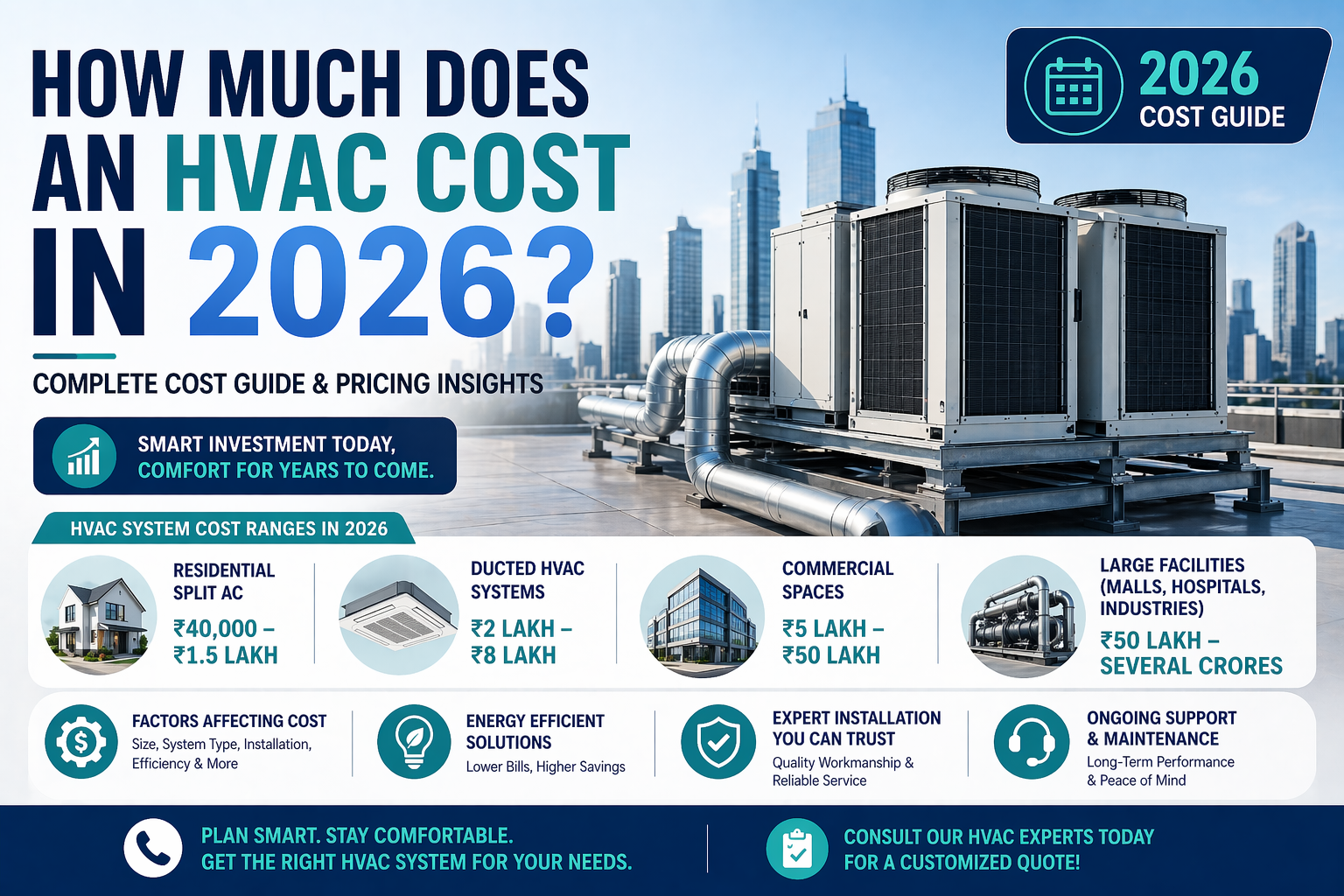
- Split AC systems: ₹40,000 – ₹1.5 lakh
- Ducted HVAC systems: ₹2 lakh – ₹8 lakh
- High-end smart HVAC systems: ₹5 lakh – ₹15 lakh
Commercial HVAC Costs
- Small commercial spaces: ₹5 lakh – ₹15 lakh
- Medium-sized buildings: ₹15 lakh – ₹50 lakh
- Large facilities (malls, hospitals, factories): ₹50 lakh to several crores
These costs typically include equipment and installation but may vary depending on customization and location.
HVAC Cost Per Ton in 2026
HVAC systems are often priced based on tonnage, which measures cooling capacity.
- ₹40,000 – ₹1,20,000 per ton depending on system type and brand
Higher tonnage systems are required for larger spaces, which increases overall cost.
HVAC Cost Per Square Foot
Another way to estimate HVAC cost is by area.
- ₹1,200 – ₹3,500 per sq. ft. for commercial HVAC systems
This includes equipment, ductwork, and installation, but complex projects can exceed this range.
Types of HVAC Systems and Their Costs
Choosing the right system is one of the biggest cost factors.
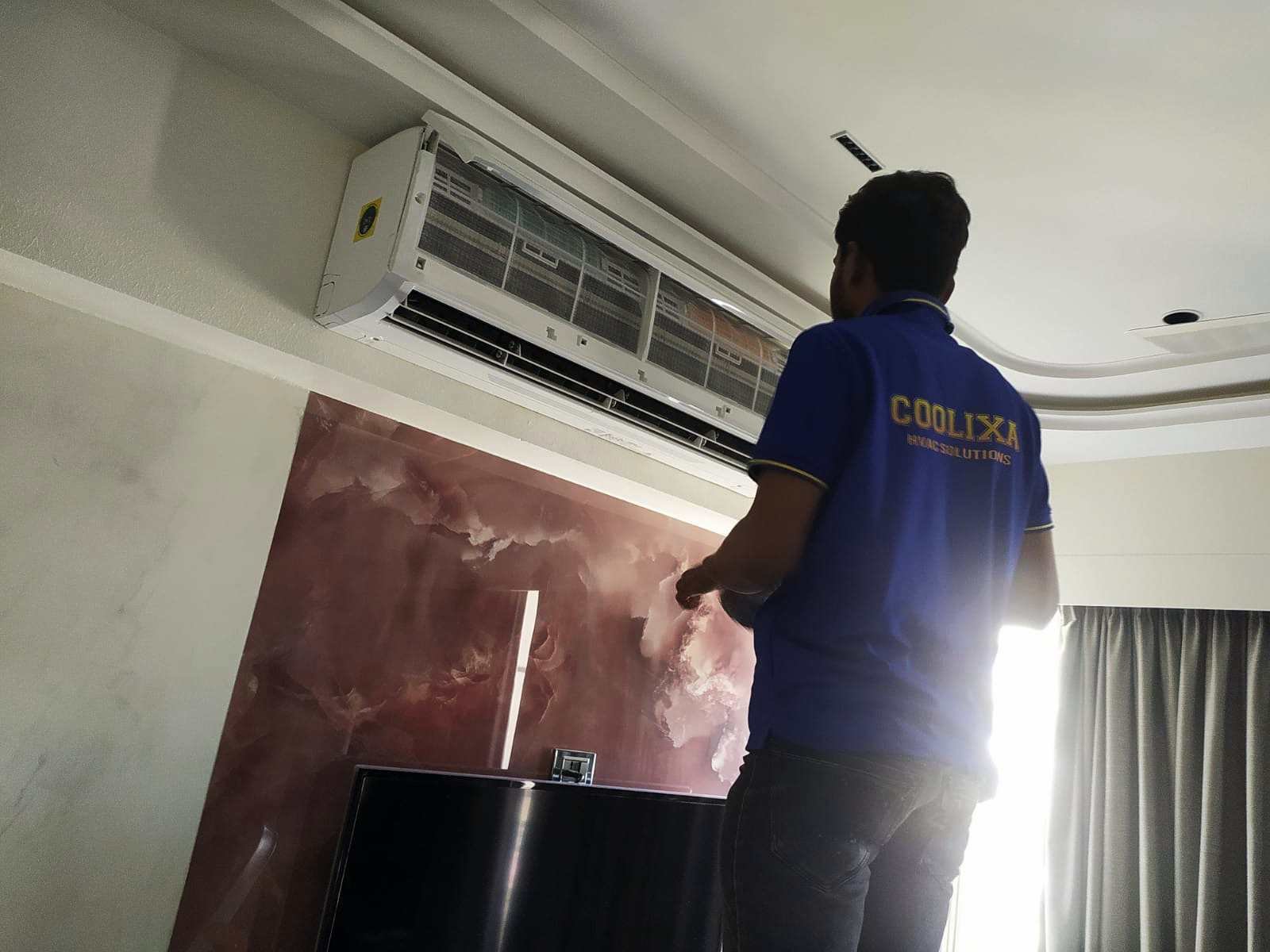
1. Split Systems
- Affordable and easy to install
- Best for homes and small offices
- Lower upfront cost
2. Ductable Systems
- Centralized cooling with concealed ducts
- Ideal for medium-sized spaces
- Moderate cost
3. VRF/VRV Systems
- Advanced systems with zoning control
- Highly energy-efficient
- Higher upfront cost but lower operating expenses
4. Central Chilled Water Systems
- Designed for large commercial buildings
- Expensive to install but cost-effective in the long run
Key Factors That Affect HVAC Cost in 2026
1. Property Size and Layout
Larger buildings require more powerful systems and complex installations, increasing both equipment and labor costs.
2. Energy Efficiency Standards
With rising energy costs and stricter regulations, high-efficiency systems are becoming the norm.
- Higher upfront cost
- Lower electricity bills
- Better environmental impact
3. Installation Complexity
Costs increase if your project involves:
- New ductwork
- Structural modifications
- Multi-zone systems
4. Smart Technology Integration
Modern HVAC systems now include:
- Smart thermostats
- Remote monitoring
- Automation systems
These features add convenience but also increase initial costs.
5. Labor and Contractor Expertise
Experienced HVAC contractors may charge more, but they ensure proper installation and long-term reliability.
6. Brand and Equipment Quality
Premium brands offer:
- Better durability
- Higher efficiency
- Longer warranties
However, they come at a higher price point.
Installation vs Operating Costs
Many people focus only on installation costs, but operating expenses are equally important.
Key insights:
- HVAC systems can consume 35–55% of a building’s electricity
- Maintenance costs can add up annually
Investing in an energy-efficient system can significantly reduce long-term expenses.
Hidden Costs to Consider
When budgeting for HVAC in 2026, don’t overlook these additional costs:
- Ductwork installation or upgrades
- Electrical modifications
- Permits and inspections
- Maintenance contracts (AMC)
- Repairs and spare parts
These can add 10–30% to your total project cost.
How to Reduce HVAC Costs in 2026
1. Choose the Right System Size
Avoid oversized or undersized systems to prevent inefficiency and extra costs.
2. Invest in Energy Efficiency
Higher upfront costs lead to long-term savings on electricity bills.
3. Plan Early
Integrating HVAC during construction is cheaper than retrofitting later.
4. Compare Multiple Quotes
Getting quotes from different contractors helps you find the best value.
5. Work with Trusted HVAC Experts
Professional installation ensures efficiency and reduces future repair costs.
HVAC Cost Trends in 2026
Here are some key trends shaping HVAC pricing:
- Rising equipment costs due to advanced technology
- Increased demand for energy-efficient systems
- Growth of smart HVAC solutions
- Higher labor costs due to skilled workforce demand
Despite higher upfront costs, modern systems offer better performance and long-term savings.
Why Choose Coolixa HVAC?
At Coolixa HVAC, we provide customized HVAC solutions tailored to your needs and budget.
What you get:
- Transparent pricing
- Accurate load calculations
- High-quality equipment
- Expert installation
- Ongoing maintenance support
We help you invest in the right HVAC system for maximum comfort and efficiency.
Final Thoughts
So, how much does an HVAC system cost in 2026?
The answer depends on your specific requirements—but whether it’s a small residential setup or a large commercial installation, HVAC remains a significant investment. The key is to focus not just on upfront costs but also on long-term performance, efficiency, and reliability.
By understanding pricing factors and working with experienced professionals, you can make a smart investment that delivers comfort and savings for years to come.