Estimate the Cost of HVAC System for New Construction
When planning a new commercial or industrial building, one of the most important systems to consider is the HVAC system. Heating, ventilation, and air conditioning play a vital role in maintaining indoor comfort, improving air quality, and ensuring smooth business operations. Whether it’s an office building, warehouse, retail complex, or manufacturing facility, installing the right HVAC system during construction is essential for long-term efficiency.
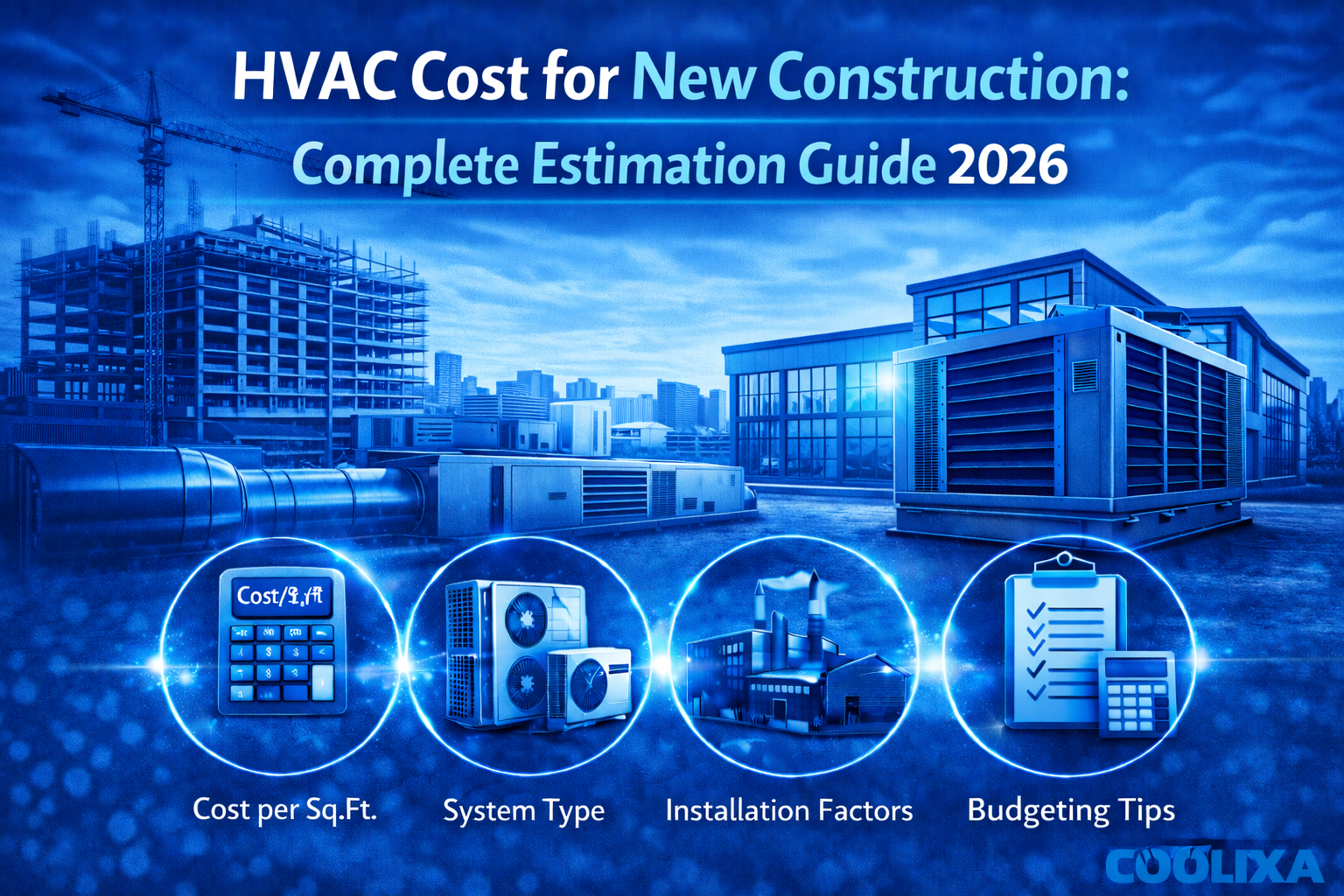
However, estimating the cost of an HVAC system for new construction can be challenging because multiple factors influence the final price. Building size, system type, installation complexity, and energy efficiency requirements all play significant roles in determining overall costs.
In this guide, we explain how to estimate HVAC costs for new construction projects and the factors businesses should consider when planning their HVAC installations.
Average HVAC Cost for New Construction
For commercial and industrial projects in India, HVAC costs are commonly estimated using a cost per square foot model.
On average, the cost of installing an HVAC system in new construction projects typically ranges between:
₹1,200 and ₹3,000 per square foot
Depending on building size and system type, total HVAC project costs may fall into the following ranges:
-
₹5 lakh to ₹20 lakh for small commercial buildings
-
₹20 lakh to ₹80 lakh for medium-sized commercial facilities
-
₹80 lakh to ₹3 crore or more for large industrial or commercial buildings
These estimates usually include HVAC equipment, ductwork, installation labor, electrical connections, and system testing.
New construction projects often allow HVAC systems to be integrated into the building design from the beginning, which can reduce installation complexity compared to retrofit projects.
Key Factors That Affect HVAC Cost in New Construction
Several factors influence the cost of installing HVAC systems in new construction projects.
1. Building Size and Layout
The total square footage of a building is one of the biggest factors affecting HVAC costs. Larger buildings require more powerful HVAC equipment and additional air distribution systems.
Buildings with multiple floors, high ceilings, or complex layouts require more advanced HVAC designs to maintain consistent airflow and temperature.
For example:
| Building Size | Estimated HVAC Cost |
|---|---|
| 3,000 sq ft retail space | ₹5 lakh – ₹15 lakh |
| 10,000 sq ft office building | ₹20 lakh – ₹50 lakh |
| 50,000 sq ft commercial facility | ₹80 lakh – ₹2 crore |
Large industrial facilities may require multiple HVAC systems to maintain proper temperature control across different areas.
2. Type of HVAC System
The HVAC system selected for the building has a significant impact on project costs.
Rooftop HVAC Units (RTUs)
Rooftop units are commonly used in commercial buildings because they combine heating and cooling components in a single outdoor unit.
Typical cost:
₹7 lakh – ₹25 lakh per unit
They are widely used in offices, retail spaces, and restaurants.
Split HVAC Systems
Split systems consist of separate indoor and outdoor units connected by refrigerant lines.
Typical cost:
₹5 lakh – ₹18 lakh
These systems are often installed in smaller commercial buildings or office spaces.
VRF / VRV Systems
Variable Refrigerant Flow systems allow precise temperature control across multiple zones within a building.
Typical cost:
₹20 lakh – ₹80 lakh+
VRF systems are ideal for hotels, hospitals, and large commercial buildings.
Chiller Systems
Chiller systems are typically used in large commercial or industrial facilities.
Typical cost:
₹80 lakh – ₹3 crore+
These systems circulate chilled water throughout the building to regulate indoor temperature.
3. Ductwork and Air Distribution
Ductwork is a major component of HVAC installation costs. Large commercial buildings require extensive duct networks to distribute conditioned air throughout the facility.
In new construction projects, ductwork can be integrated into the building structure during the design phase, which often reduces installation costs compared to retrofitting existing buildings.
However, complex duct layouts can still increase material and labor costs.
4. Cooling Load and Internal Heat Sources
Cooling load refers to the amount of heat that must be removed from a building to maintain comfortable temperatures.
Commercial buildings often have high cooling loads due to:
-
Lighting systems
-
Computers and office equipment
-
Industrial machinery
-
High occupancy levels
Higher cooling loads require larger HVAC systems, which increases equipment and installation costs.
5. Energy Efficiency and Smart Controls
Energy-efficient HVAC systems may require higher upfront investment but can significantly reduce long-term operating costs.
Common energy-efficient features include:
-
Variable-speed compressors
-
Smart thermostats
-
Energy recovery ventilation
-
Building automation systems
Many new construction projects incorporate smart HVAC technology to improve energy management and reduce electricity consumption.
HVAC Cost Estimation Formula
HVAC contractors often estimate project costs using a simple formula.
HVAC Cost Formula
HVAC Cost = Building Size × Cost per Square Foot
Example:
Building size: 12,000 sq ft
Estimated HVAC cost: ₹2,000 per sq ft
Estimated HVAC installation cost:
12,000 × ₹2,000 = ₹2.4 crore
This estimate typically includes HVAC equipment, ductwork, and installation costs.
However, specialized systems or complex installations may increase the total project budget.
Additional Costs in HVAC Projects
When estimating HVAC costs for new construction, businesses should also consider additional project expenses.
HVAC Design and Engineering
Professional HVAC engineers perform load calculations to ensure the system is correctly sized for the building.
Electrical Infrastructure
Large HVAC systems require significant electrical capacity. Electrical upgrades may be necessary in some projects.
Structural Reinforcement
Heavy rooftop units may require structural reinforcements to support equipment weight.
Building Automation Systems
Many commercial buildings integrate HVAC systems with building management systems to optimize energy use and monitor system performance.
These additional costs can increase the total HVAC project budget by 10% to 30%.
Maintenance and Operating Costs
In addition to installation costs, HVAC systems require ongoing maintenance to ensure reliable performance.
Routine HVAC maintenance includes:
-
Cleaning coils and filters
-
Checking refrigerant levels
-
Inspecting motors and fans
-
Monitoring system efficiency
Commercial HVAC maintenance costs typically range between ₹1 lakh and ₹5 lakh per year, depending on system size.
Preventive maintenance helps extend equipment lifespan and reduce the risk of costly breakdowns.
Tips to Reduce HVAC Costs in New Construction
Businesses can reduce HVAC installation costs by following a few key strategies.
Plan HVAC Early in the Design Phase
Integrating HVAC systems into the building design allows for more efficient installation.
Choose Energy-Efficient Equipment
High-efficiency HVAC systems reduce energy consumption and long-term operating costs.
Improve Building Insulation
Better insulation reduces heating and cooling demand, allowing businesses to install smaller HVAC systems.
Perform Preventive Maintenance
Regular maintenance improves system performance and reduces repair costs.
Final Thoughts
Estimating the cost of an HVAC system for new construction requires careful planning and understanding of building requirements. In most commercial projects, HVAC installations typically cost between ₹1,200 and ₹3,000 per square foot, depending on system type, building size, and installation complexity.
Although HVAC systems represent a major investment, they are essential for maintaining indoor comfort, improving air quality, and supporting efficient building operations.
By working with experienced HVAC professionals and choosing energy-efficient systems, businesses can ensure reliable performance and long-term cost savings.