What is the Difference Between a Rooftop Unit and a Split System?
Deciding between HVAC systems is challenging enough, especially when you encounter jargon that no one has explained. When you have an upgrade for your property, you will likely face a choice between a rooftop unit and a split system.
Both are made for your comfort but they have different appearances and utilities. Choosing the right one is more than simply cooling, and it is also the first step towards improved energy efficiency and lower monthly bills.
Understanding the Rooftop Unit (RTU)
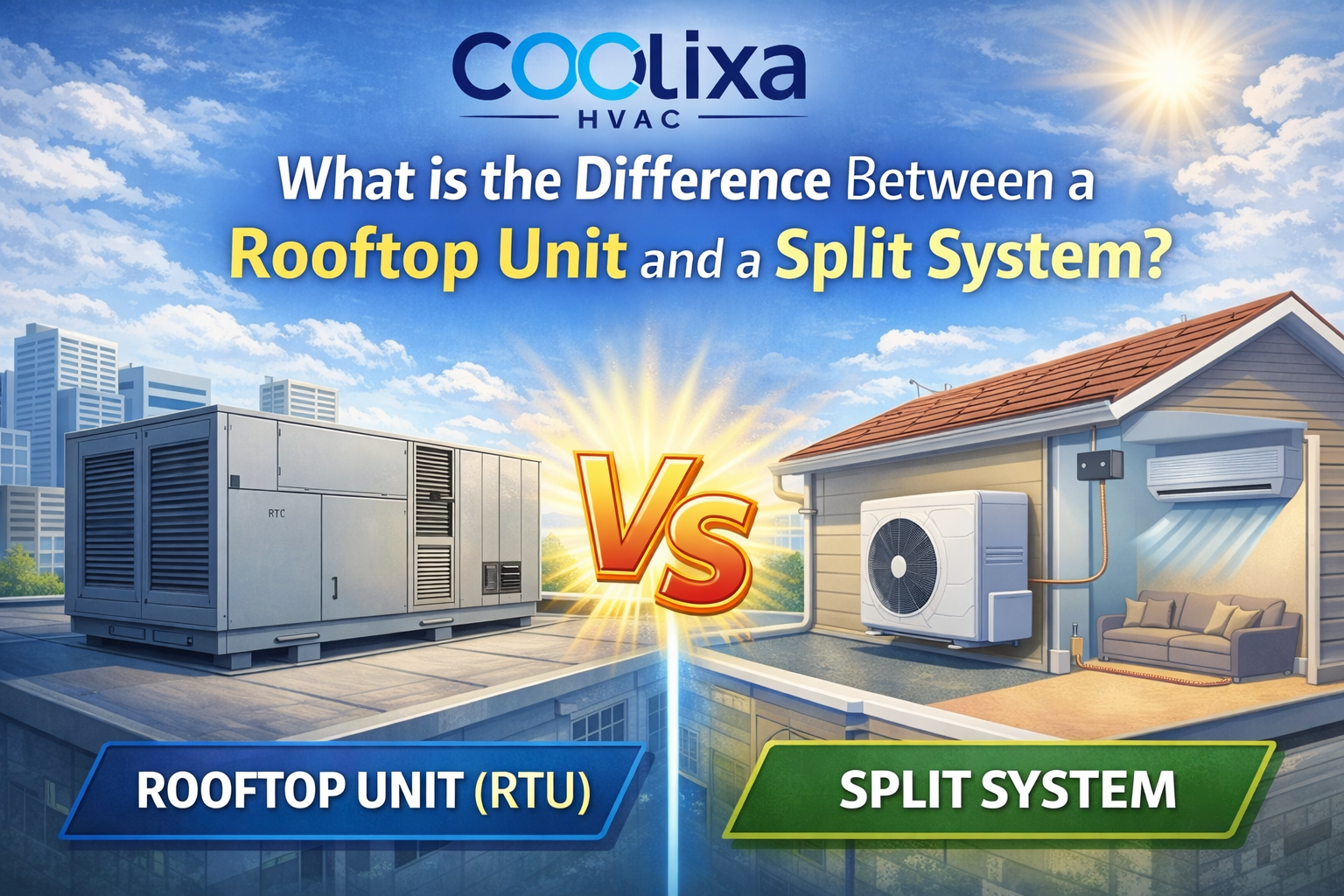
A rooftop unit is essentially a “package deal.” Everything the system needs to run—the compressor, the coils, and the fans—lives inside one single metal box sitting on your roof. Because everything is in one place, these systems are common for businesses with flat roofs. They stay out of sight, keep noise away from people inside, and don’t take up any room in your basement or closets.
Understanding the Split System
A split system divides the work between two separate locations. You have a large unit outside and a smaller air handler inside. They talk to each other through copper piping filled with refrigerant. You see these most often in houses or small offices because they are flexible. If you don’t have a flat roof, a split system is usually the way to go.
Quick Comparison Table
This table breaks down the main points of contact between the two setups:
| Feature | Rooftop Unit (RTU) | Split System |
| Location | Entirely on the roof | Split between inside and out |
| Space Needs | Zero indoor space used | Needs a closet or attic |
| Best Use Case | Large open buildings | Homes and small offices |
| Service Needs | All in one spot | Two separate locations |
| Installation | Heavy lifting (Cranes) | Standard setup |
| Control | Great for big areas | Great for individual rooms |
Maintenance and Installation Realities
The installation process is where you really see the difference. To put a unit on a roof, you often need a crane and a reinforced roof structure to hold the weight. However, once it is up there, it is very easy to service. A qualified technician will complete all required repairs without entering your home or office.
Split system installation is unique, as an outdoor unit is installed either on the ground or a wall, but the indoor unit resides within the home. Since this protects the indoor components from potential weather damage, technicians must work in two different places when resolving service calls. If you value indoor silence, split systems are great because the loudest parts stay outside.
Efficiency and Power
When we talk about efficiency, we look at SEER ratings. Split systems usually win here if you want to cool specific “zones” or rooms at different temperatures. Rooftop units are better for moving massive amounts of air through large, open spaces. They are built for endurance and high-volume work.
Conclusion
Choosing the best HVAC system goes beyond just what you’ll pay; it also means getting an HVAC system that is reliable over the long haul and fits with your building’s layout. Professional advice is paramount in helping you pick out your ideal system – whether you prefer the compactness of a roof mount system or a quieter, adaptable split system.
If you’re ready to solve the climate control problems at your property, connect with us now at Coolixa HVAC for a consultation with no strings attached, where our team can assist you in finding (and maintaining) the ideal system to keep your environment comfortable year-round!